When a person comes to me for a consultation for the first time, they almost always ask the same question before we even begin: "How does this actually work?"
A good question. An honest question. And I'm glad people ask it - because it means they're approaching Tarot consciously, not out of superstitious fear or blind faith.
In this article I'll answer it in detail. I'll explain what Tarot cards are from a historical and structural perspective - and what they mean in real practice. No mystical fog, but no dismissiveness either. Just honest, the way I'm used to working.
What Are Tarot Cards: A Simple Definition
Tarot cards are a deck of 78 symbolic images, each carrying a specific psychological archetype, image, or life situation.To put it simply: it's a language. A language of symbols, images, and archetypes that has existed for several centuries and over that time has become a remarkably precise mirror of human life.
When a tarot reader lays out cards in response to your question, they are not "guessing" or "summoning spirits." They are reading a symbolic narrative - a story that the card images form at this particular moment, for your particular situation.
It is a tool. One of the oldest tools for working with your own subconscious, intuition, and hidden behavioural patterns.
My position as a tarot reader: I work at the intersection of esotericism and psychology. For me, Tarot cards are not magic in the mystical sense, but a deep system of symbols that helps reveal what a person already knows inside - but has not yet consciously realised.
The History of Tarot Cards: From Playing Cards to a Tool of Self-Discovery
14th–15th century: birth in ItalyTarot is a deck of cards that, according to various accounts, appeared as early as the 14th century in different parts of Europe for card games. Tarot was particularly beloved in Italy.
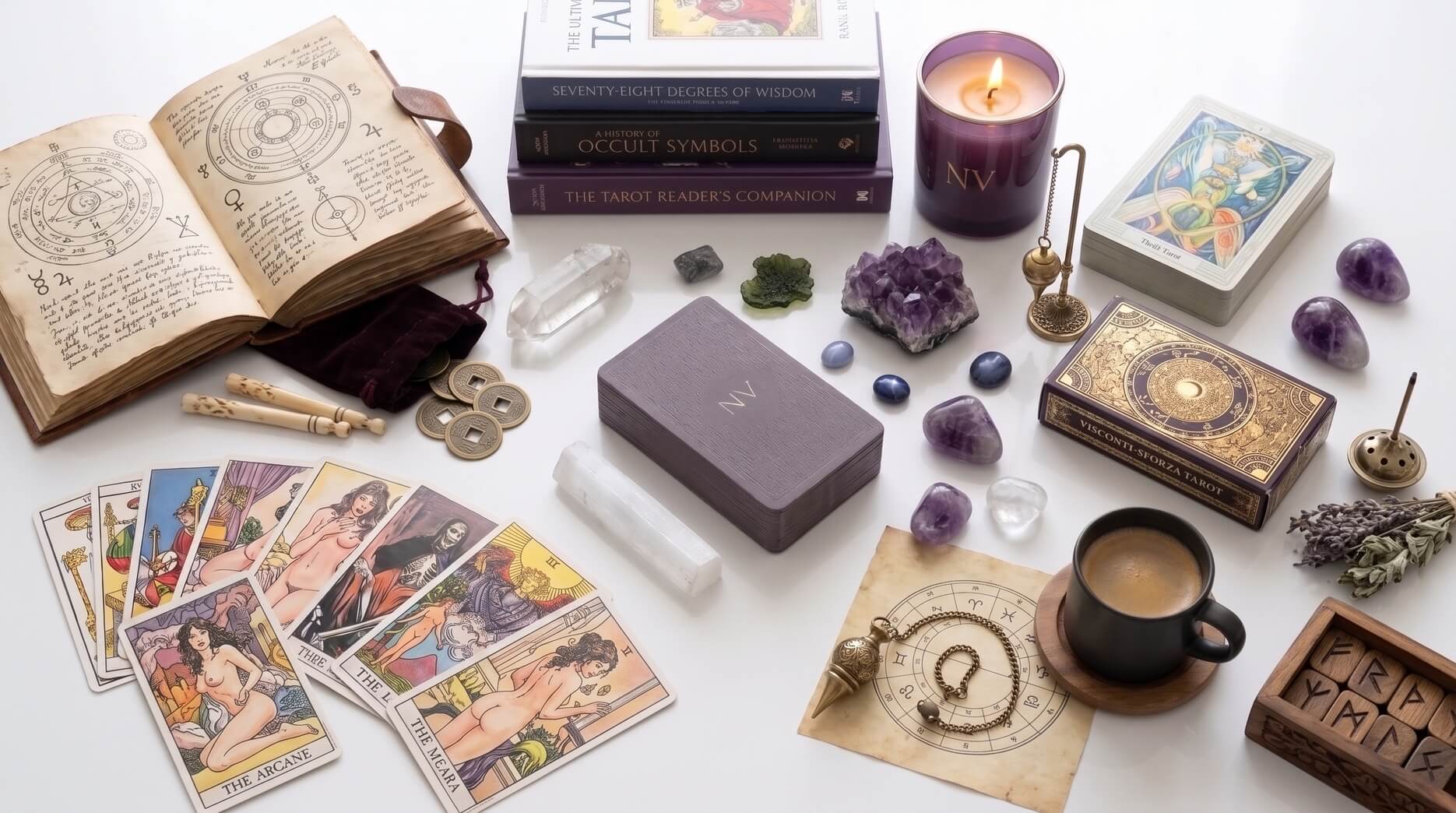
The first decks were created for aristocratic games and were true works of art. The oldest Tarot deck, created in the 15th century, is the Visconti-Sforza Tarot. The card illustrations were rendered in the style of the Italian Renaissance with the use of gold leaf.
No mysticism whatsoever. Simply a game for the nobility.
18th century: the turn toward divination
From the late 18th century, Tarot began to be used for predicting the future - a period when Europe saw a surge of interest in esotericism and ancient civilisations.
Antoine Court de Gébelin, a Freemason and French writer, published a book claiming that Tarot cards had been used for prophecy in ancient Egypt.
This has never been academically confirmed - Tarot has no Egyptian origin. But it was precisely this myth that gave the cards their mysterious aura and transformed a gaming tool into a divination system.
20th century: the birth of modern Tarot
The most popular Tarot system as we know it today took shape in the early 20th century, thanks to Arthur Waite - a Freemason, writer, and mystic. Together with artist Pamela Colman Smith, he created the Rider-Waite deck - the very one that most tarot readers around the world use today, including myself.
21st century: Tarot as a cultural trend
In the first year of the pandemic, Tarot card sales tripled. Their popularity has been growing worldwide for years: the Massachusetts Institute of Technology has been building a library of different Tarot card versions since 2018, and Dior in 2021 released a collection inspired by Tarot symbolism.
Tarot is no longer a niche esoteric tool - it is part of global culture.
The Structure of the Deck: 78 Cards That Describe All of Life
A standard Tarot deck consists of 78 cards, divided into two major groups.Major Arcana - 22 cards
The Major Arcana includes 22 cards, each symbolising important stages of the life journey, spiritual lessons, and archetypal energies.
These are large-scale cards: fateful turning points, deep lessons, archetypal forces. When many Major Arcana appear in a spread, the situation is significant - it touches the very foundations of life.
Here are all 22 Major Arcana cards:
| № | Card | Keyword | Element |
|---|---|---|---|
| 0 | 🃏 The Fool | New, beginning | Air |
| I | 🎩 The Magician | Will and mastery | Air |
| II | 📖 The High Priestess | Intuition and mystery | Water |
| III | 🌸 The Empress | Abundance and fertility | Earth |
| IV | 👑 The Emperor | Power and structure | Fire |
| V | ☪️ The Hierophant | Tradition and mentor | Earth |
| VI | 💑 The Lovers | Choice and union | Air |
| VII | 🏆 The Chariot | Victory and movement | Water |
| VIII | 🦁 Strength | Inner and physical power | Fire |
| IX | 🕯️ The Hermit | Wisdom and isolation | Earth |
| X | ☸️ Wheel of Fortune | Fate and cycle | Fire |
| XI | ⚖️ Justice | Karma and balance | Air |
| XII | 🙃 The Hanged Man | Pause and new perspective | Water |
| XIII | 💀 Death | Ending, transformation | Water |
| XIV | 🌊 Temperance | Harmony and synthesis | Water |
| XV | 😈 The Devil | Addiction, manipulation | Earth |
| XVI | ⚡️ The Tower | Shattering illusions, revelation | Fire |
| XVII | ⭐️ The Star | Hope and healing | Air |
| XVIII | 🌙 The Moon | Illusions and the subconscious | Water |
| XIX | ☀️ The Sun | Joy and success | Fire |
| XX | 📯 Judgement | Awakening, revelation | Fire |
| XXI | 🌍 The World | Completion and wholeness | Earth |
Minor Arcana - 56 cards
Tarot decks also contain 56 Minor Arcana cards - 4 suits of 14 cards each: Wands, Swords, Cups, and Pentacles (Coins). Each suit consists of numbered cards (from Two to Ten), a Page, a Knight, a Queen, a King, and an Ace.
The Minor Arcana describe everyday life: specific events, emotions, situations, and people. The four suits cover every sphere:
✔ Wands 🔥 - passion, creativity, career, the energy of action
✔ Cups 💧 - feelings, love, relationships, intuition
✔ Swords 💨 - thought, conflict, decisions, truth
✔ Pentacles 🌍 - money, health, the material world, stability
How Tarot Cards Work: Three Honest Explanations
This is the main question I hear over and over again. And I'll answer it honestly - because this question has several levels of answer, each of which is true in its own way.Explanation 1: psychological
Tarot is less about magic and more about self-discovery: through analysing the symbolism of the cards, a person can better understand specific situations, make sense of their emotions, and identify a direction for growth. Interpreting the answers develops the skill of self-reflection, which promotes positive changes across many areas of life.
A card is a mirror. When you look at an image and ask "what does this mean for me?" - you have already begun working with your subconscious. The image activates associations, emotions, and memories. What seemed foggy begins to take shape.
That is precisely why I combine Tarot work with psychological tools - it multiplies the effect many times over.
Explanation 2: the theory of synchronicity
The psychologist Carl Jung introduced the concept of synchronicity - meaningful coincidences that have no causal connection yet carry significance.
When a person at a specific moment in their life asks a specific question and draws a specific card - that is not "random." The card drawn at this exact moment, by you, reflects the energetic context of your situation. Jung held the Tarot system in high regard precisely for its ability to work through synchronicity.
Explanation 3: the tarot reader's intuition
A professional tarot reader is not simply someone who has memorised the meanings of 78 cards. They are a practitioner who knows how to read the interaction between cards, the narrative of a spread, and the subtle nuances of symbolism as applied to a specific situation.
Over years of practice, a special kind of intuition develops - the ability to see patterns and connections that do not lie on the surface. That is why a skilled, qualified tarot reader will deliver a fundamentally different result than self-divination from a book.
From my practice: A client came with a question about her career. The spread produced three Cups cards in a row. Technically, Cups are the suit of emotions - not career. But that was precisely what pointed us toward the realisation that her "career question" was really a question about relationships. We unpacked that, and she received a completely different - and far more important - answer. That is what it means to read a spread, not just the cards.
You may also find this interesting - What is the secret of Tarot cards?
What Tarot Cards Are Used For: 7 Real Requests
People come to Tarot with very different questions. Here are the most common ones - the ones I work with:1. Relationships and love "Does he (she) love me?", "Will we be together?", "Should I keep going?", "Why did we break up?" - the most popular category of requests.
2. Career and business "Am I on the right path?", "Should I start my own venture?", "How do I build a relationship with my partners?"
3. Making important decisions When a person stands at a crossroads and doesn't know which way to go - Tarot helps reveal the potential consequences of each choice.
4. Understanding yourself "Why do I keep attracting the same situations?", "What is my life pattern?" - this is deep work with psychological archetypes.
5. Getting unstuck When a person is "frozen" in a situation and cannot move forward. Tarot helps reveal what is holding them - and how to let it go.
6. Finances "When will my financial situation improve?", "Is it worth investing in this project?"
7. Psychological work A number of psychologists and psychotherapists use Tarot in practice as metaphorical cards. This is precisely how I work - as a tarot reader with a psychological background.
Myths About Tarot Cards It's Time to Dispel
Over the years of practice I have heard many fears and misconceptions. Let's address the most common ones.Myth 1: "The Death card means physical death"
Reality: The Death card is one of the most transformative in the deck. It symbolises the end of one chapter of life and the beginning of a new one: leaving a toxic relationship, changing careers, letting go of outdated beliefs. In 7+ years of practice I have not seen a single case where this card signified literal death.
Myth 2: "Tarot is a sin and a forbidden practice"
Reality: Tarot is a system of symbols created by people. The tool itself is neutral - everything depends on the intention of the person using it. Many psychologists and spiritual practitioners from various traditions work with Tarot as a tool for reflection, not magic.
Myth 3: "Cards can attract dark forces"
Reality: Cards are paper with images on them. They do not open "portals" or "attract" anything. A professional consultation with an experienced tarot reader is work with the images and symbols of your own subconscious.
Myth 4: "Tarot predicts an unchangeable future"
Reality: Tarot is not a tool for predicting fate - it is more of a way to speak with yourself through images and metaphors. A spread shows the most likely course of events given current circumstances. But you can always change the trajectory - by changing your actions, decisions, and mindset.
Myth 5: "Anyone can read cards for themselves - why do you need a tarot reader?"
Reality: Self-reading is possible, but has serious limitations. When you read for yourself, objectivity suffers. Emotions distort the perception of symbols. An experienced tarot reader sees the spread without emotional involvement, knows how to ask the right questions, and can read nuances that a person under stress or in love will simply miss.
Types of Tarot Spreads
A spread is a layout in which cards are placed in specific positions. Each position has its own meaning. Here are the most popular ones.Card of the Day (1 card) The simplest spread for daily orientation. Question: "What should I pay attention to today?" Here you can select your Card of the Day online →
Three cards: Past - Present - Future A foundational spread for understanding the dynamics of a situation. Takes 5–10 minutes and provides a clear picture.
Celtic Cross (10 cards) A complex spread that reveals the past, present, and future, as well as hidden factors, subconscious influences, and the outcome of the situation. The most informative general-purpose spread.
Relationship spread Specialised layouts for analysing the dynamic between two people: feelings, hidden motives, potential, obstacles.
Year spread (12 cards) One card for each month of the year - a forecast and recommendations for the entire period.
Yes/No spread For obtaining a clear answer to a specific question, with an analysis of factors for and against.
How to Choose a Good Tarot Reader: 5 Criteria
Demand for Tarot cards has risen sharply. Along with it, the number of tarot readers has grown - of varying levels of professionalism. Here is what to look for when choosing a specialist.1. Education and certification. A good tarot reader has studied under recognised specialists and holds proof of their qualifications. I am a Certified Tarot Master - a diploma from The Great Tarot School, one of the leading international schools of Tarot.
2. Years of practice. Ask how many years the person has been practising and what kinds of requests they work with. 5–7+ years of experience and active practice is a good sign.
3. A psychological approach. A tarot reader who combines card work with psychological tools will deliver a deeper and more practical result than one who simply "reads" meanings.
4. Ethics and boundaries. A professional tarot reader does not use scare tactics, does not create dependency on consultations, and does not promise to "remove a curse." They help you make a conscious decision - and let you go.
5. Real client reviews. Read genuine reviews with specifics, not generic phrases like "everything was great."
Also read - What to do if the result of a Tarot reading does NOT match your expectations?
Why Tarot Cards Are So Popular Today
In times of crisis and uncertainty, people want guidance on how to act and what decision to make in order to improve their lives. In a complex, fast-changing world, people long for some island of stability - and Tarot cards can be exactly that.But I see another reason - a deeper one.
We live in an age of information overload. We are bombarded with advice, algorithms, and other people's opinions. And at some point a person stops looking for yet another external source of answers - and starts looking for a way to hear themselves.
Tarot is precisely that. A way to slow down, ask the right question, and listen to what your intuition has long known.
Tarot is gaining ever-greater popularity because it is knowledge accessible to everyone. If in past centuries Tarot was considered a tool of fortune-tellers and magicians, today anyone can connect with the wisdom of the cards.
Frequently Asked Questions About Tarot Cards
Can pregnant women have a reading? There are no restrictions - neither from a medical nor an esoteric perspective. Many women turn to Tarot during pregnancy specifically to gain a deeper understanding of themselves and their path.How often can I have a reading? On the same question - no more than once a week. Frequently repeating the same question reflects anxiety, not a desire for clarity. It is better to work on the root cause of the anxiety.
Does an online consultation work as well as an in-person meeting? Yes. Practice shows that an online reading is no less accurate than a personal one. The format does not affect the quality of the work.
Do you need a "special gift" to read Tarot? There is no innate "gift" - there is learning, practice, and the development of intuition. Anyone can learn to work with the cards at a basic level. A professional level requires years of practice and proper training.
How do I prepare for a consultation? Formulate a specific question. The more precise the question, the more precise the answer. "How will everything go for me?" is a poor question. "What is the potential of my relationship with [name] over the next 3 months?" is a good one.
More questions for a Tarot reader - read here >>>
Conclusion: Why Turn to Tarot Right Now
Tarot cards are not a crystal ball and not a guaranteed prediction. They are a tool for deep dialogue with yourself, expressed through the language of archetypes and symbols proven across centuries.If you are facing an important decision, feeling stuck, or want to understand the hidden causes of recurring situations - a Tarot reading with a professional reader can give you exactly the clarity you have been seeking.
Not because the cards "know everything."
But because the right questions are already half the answer.
Book a Consultation with AstroTarot Motivator Nika Vision
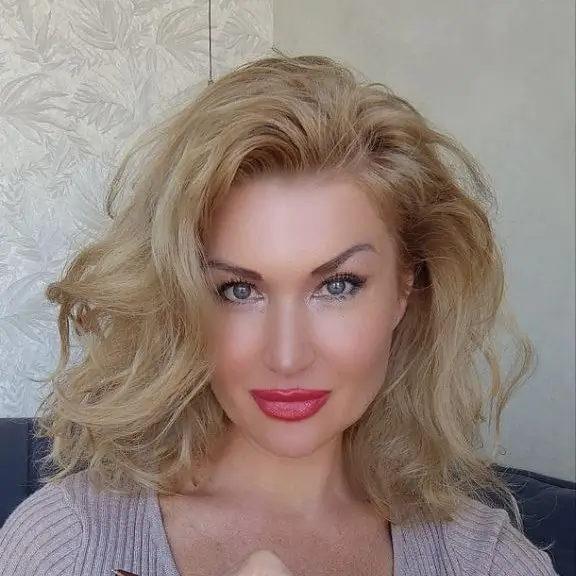
I am Nika Vision, a certified tarot reader (Certified Tarot Master, The Great Tarot School) with a psychological approach to working with the arcana (Tarot cards).I offer online consultations - for clients in Ukraine and anywhere in the world.
📩 Sign up for an individual consultation and together we will see what The World says about your situation!
Online services tarot, astrology... →