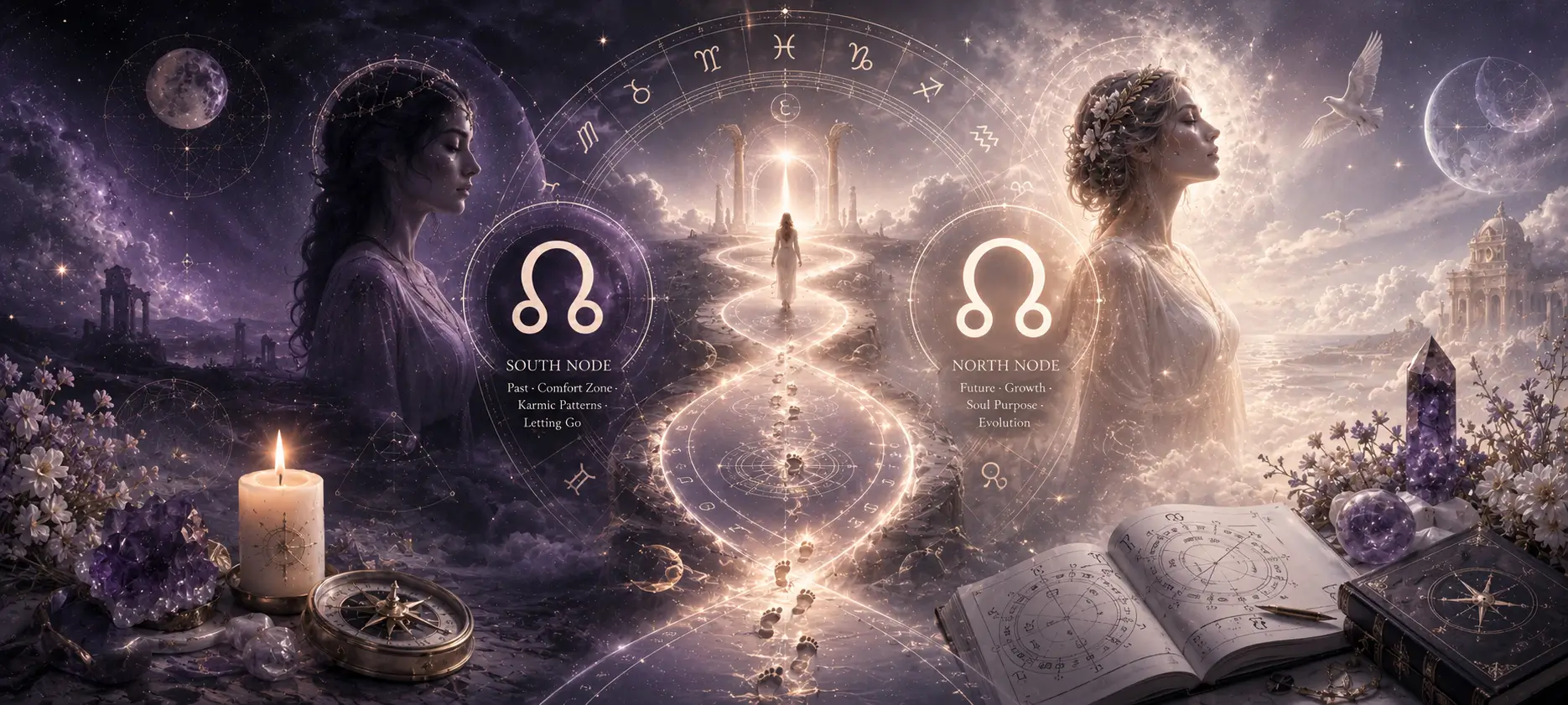
The Lunar Nodes are one of three key lunar points in a natal chart, along with Lilith and Selena. If you want to see how all three topics fit into a single unified system, check out the article Lilith, Selena, and Lunar Nodes. And here is a detailed breakdown specifically of the nodal axis.
Lunar Nodes: Brief Dossier 📋
| Parameter | Value |
|---|---|
| Alternative name | Karmic Nodes |
| What it is | Intersection points of the Moon's orbit with the ecliptic (the path of the Sun) |
| North Node (Rahu) | The Dragon's Head (Caput Draconis) — new experience that needs to be developed in the second half of life (in the areas occupied by the Node of the Future), vector of growth, future, life path that needs to be fulfilled by acquiring new skills according to the sign and house position of Rahu. It is believed that this new experience will become your past experience, South Node Ketu, in the next life or incarnation. |
| South Node (Ketu) | The Dragon's Tail (Cauda Draconis) — comfort zone, past, familiar, accustomed experience (acquired in a past life or incarnation), what we know/what comes easily to us from birth, the baggage brought from the past that we use during the first half of life according to the sign and house themes of Ketu. |
| Position | Always in exactly opposite signs and houses |
| Full cycle | ~18.6 years |
| Direction of movement | Retrograde (against the order of zodiac signs) |
| Calculation types | True and Mean Nodes |
| Key book | Martin Schulman, «Karmic Astrology: The Moon's Nodes and Reincarnation» |
What Are Lunar (Karmic) Nodes in Simple Words 🔑
Lunar or Karmic Nodes (Rahu and Ketu) are astronomical points of intersection between the Moon's orbit and the Sun's ecliptic, forming an axis of destiny in the natal chart: the South Node shows past accumulated experience and comfort zone, while the North Node indicates the vector of future development and human purpose.The orbit of the Moon around the Earth is slightly tilted relative to the ecliptic — the imaginary path along which the Sun travels across the sky throughout the year. Twice during each orbit, the Moon's path crosses the ecliptic — at these two points, located exactly opposite each other, lie the North and South Nodes.
💡 Important: the term «Karmic Nodes» gained traction for a reason: Martin Schulman, in his book «Karmic Astrology: The Moon's Nodes and Reincarnation» (1975), proposed an interpretation that became classic and gave its name to the entire approach — the South Node is what is already mastered, familiar, and comfortable (sometimes to excess), while the North Node is a new direction, unexplored material containing unreached yet necessary growth. In his view, staying excessively long in South Node territory creates stagnation, whereas moving honestly toward the North Node, even if uncomfortable at first, unlocks a person's true potential.
True and Mean Nodes: What Is the Difference ⚖️
Just like with Lilith, there are two methods of calculation:Mean Nodes — a smoothed position without short-term orbital fluctuations, moving at a constant speed.
True Nodes — the exact position accounting for actual wobbles in the lunar orbit, moving less evenly.
Most modern astrology software defaults to Mean Nodes, but the difference between the two methods is usually minor (within one degree), unlike Lilith, where the divergence can be more significant.
Why Nodes Are Almost Always «Retrograde» 🔄
Here is an important detail that confuses many beginners: unlike planets, for which retrograde motion is a temporary state, Lunar Nodes move backward (against the order of the zodiac signs) almost continuously — this is their normal, natural movement. Brief direct motion occurs extremely rarely and is considered so unusual that some astrologers assign special significance to those rare periods.North (Rahu) and South (Ketu) Nodes in Zodiac Signs ♈
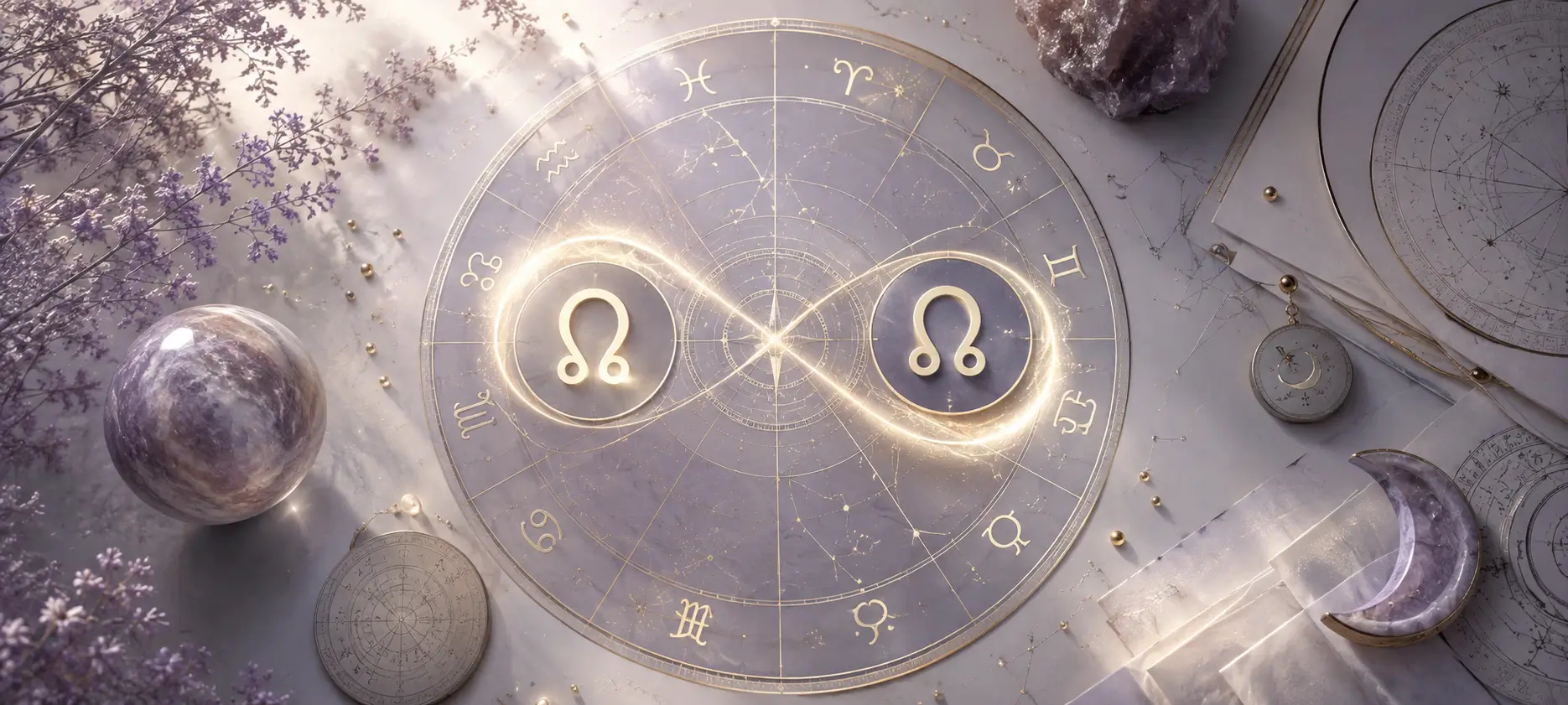
The Nodes are always in opposite signs — if the North Node is in Aries, the South Node is automatically in Libra:| Nodal Axis | North Node (growth) | South Node (comfort) |
|---|---|---|
| Aries ♈ — Libra ♎ | Learn to assert oneself directly, be a leader, establish personal boundaries | Release excessive dependency on approval, overcome indecisiveness and co-dependence with a partner |
| Taurus ♉ — Scorpio ♏ | Learn depth, emotional flexibility, risk taking, aiming high, influencing masses | Release controlling behaviors over others' resources and emotions, learn trust, move from extremes toward stability |
| Gemini ♊ — Sagittarius ♐ | Learn multitasking, adaptability, lightness in decision-making and communication, readiness to be a student | Release rigid, dogmatic beliefs, expand knowledge and worldview, enter international realms, practice mentorship and expertise |
| Cancer ♋ — Capricorn ♑ | Learn self-control, boundaries, build personal status, structure, emotional resilience, pursue achievements constructively | Learn emotional closeness, vulnerability, care, release conservatism and harsh rules, be softer, trust intuition |
| Leo ♌ — Aquarius ♒ | Learn creative expression, value group opinions, teamwork, utilize modern technologies, trends, innovations | Release losing oneself in group dynamics, prioritize personal needs over collective demands, shine, leverage personal charisma |
| Virgo ♍ — Pisces ♓ | Learn practical order and dedicated work, reduce self-criticism, adopt flexible working methods, incorporate creativity and psychology | Release escaping into illusions or boundaryless martyrdom, become more practical, organized, build systematic approaches, care for health |
💡 Important: the remaining 6 signs form mirror axes: Libra–Aries, Scorpio–Taurus, etc. — growth and comfort directions are symmetrically reversed.
Nodes in Houses: Where to Look for Details 🏠
The house of the North Node indicates the specific area of life where the primary growth vector is focused, while the opposite house (containing the South Node) shows the area of familiar comfort. The general logic of house placements is discussed in the Houses and Life Spheres section — the same applies to the nodal axis: for example, the North Node in the 10th house with the South Node in the 4th house often points toward public self-realization while working through excessive attachment to domestic comfort.Aspects to the Nodes from Other Planets 🔗
Sun conjunct North Node — a strong inner feeling of being «on one's path»; such individuals often fulfill their potential faster.Saturn aspecting the nodal axis — karmic growth requires discipline and structure; the path is rarely easy, but the results are lasting.
Venus or Mars near the South Node — an innate, effortless talent in matters of love or action, which, however, shouldn't become the sole foundation of life.
Mythology: Rahu, Ketu, and the Churning of the Ocean of Milk 🏺
In Vedic tradition, the North and South Nodes are called Rahu and Ketu and are tied to the myth of the churning of the Ocean of Milk by gods and demons seeking the nectar of immortality. The demon Rahu craftily drank a drop of ambrosia, but was beheaded by Vishnu before it passed his throat — ever since, his head (Rahu) and body (Ketu) are eternally separated at opposite points in the sky, forever pursuing the Sun and Moon to avenge the exposed trickery (hence the connection of the nodes to eclipses).💡 Important: this myth reflects the essence of the axis: divided into two halves — a head without a body (thirst for new things without roots) and a body without a head (rich experience without direction) — wholeness is achieved only through conscious integration of both parts.
Nodes and Tarot: Symbolic Parallel 🃏
Just like with Lilith, there is no single universally accepted correspondence between the Nodes and Tarot cards, but conceptually they align closest with the Major Arcana X — Wheel of Fortune, representing cycles of fate, turning points, and karmic lessons. Read more in the Major Arcana section.Nodes in Compatibility and Synastry 💞
The nodal axis is one of the most widely discussed indicators of «karmic» compatibility.Partner's personal planets conjunct your North Node — a feeling that this person encourages your personal growth, sometimes uncomfortable, yet necessary.
Partner's personal planets conjunct your South Node — an easy, comfortable, nearly «familiar» connection, which should nonetheless be balanced with conscious personal progress.
Nodes of both partners conjunct each other — many traditions consider this connection highly meaningful for joint evolution, even if relationship dynamics are challenging.
Read more in the Compatibility and Synastry section. If you want to explore compatibility through birth dates, try the Online Compatibility Calculation by Birth Date →
Nodal Return: Three Major Life Milestones 🔄
Every 18.6 years, transiting Nodes return to the exact zodiac position they held at your birth — this is called a Nodal Return, considered a major milestone alongside the famous Saturn Return.First Nodal Return (~18–19 years) — entry into adulthood: the first conscious choice of direction, often coinciding with graduating high school and initial independent choices.
Second Nodal Return (~37–38 years) — midlife evaluation: an honest review of whether you are advancing toward the North Node or remain stuck in South Node comfort.
Third Nodal Return (~56–57 years) — transition to wisdom: reviewing your life journey and passing accumulated knowledge down through mentorship.
Each milestone invites a question: does my current life match the growth path intended at birth, or have I stayed in my comfort zone for too long?
Common Misconceptions About Nodes ❌
❌ Myth: «The South Node is bad and must be completely abandoned» — false, this distorts the technique: the South Node is a source of innate talents that support growth, rather than something to be discarded entirely.❌ Myth: «The North Node guarantees easy success» — false, growth is rarely easy initially: that is why it is growth, not comfort; success comes through deliberate effort.
❌ Myth: «Everyone born on the same day has the exact same nodal axis» — while nodal signs match for people born around the same period, house placements and aspects remain unique to exact birth times and locations.
Mini Case Study from Practice 📖
A client came for a consultation asking why she excels at taking care of everyone around her while feeling an inner emptiness. The analysis revealed a South Node in Pisces in the 12th house and a North Node in Virgo in the 6th house — a classic axis between boundaryless caretaking (comfort zone) and structured, practical service through dedicated work (growth zone). The solution was not to abandon empathy, but to channel it into an organized professional practice rather than endlessly dissolving in others' problems without tangible results.Nodes vs Ascendant/Descendant: Distinguishing the Axes ⚖️
Both pairs form axes of opposites in a chart, but their meanings differ fundamental:Ascendant/Descendant — the «Self and Other» axis: how you present yourself (Ascendant) and what partner you seek (Descendant); it represents space in the present moment.
North/South Node — the «Past and Future» axis: what has been mastered (South Node) and where personal growth lies (North Node); it represents time and trajectory along life's path.
Both axes operate independently and do not necessarily share the same sign or house placements.
Reflection Practice 📝
Think of an area of life where everything feels easy and familiar, yet brings little fulfillment. Ask yourself: what if I stopped clinging to this ease and redirected that effort toward an uncomfortable, long-delayed growth path — what would change?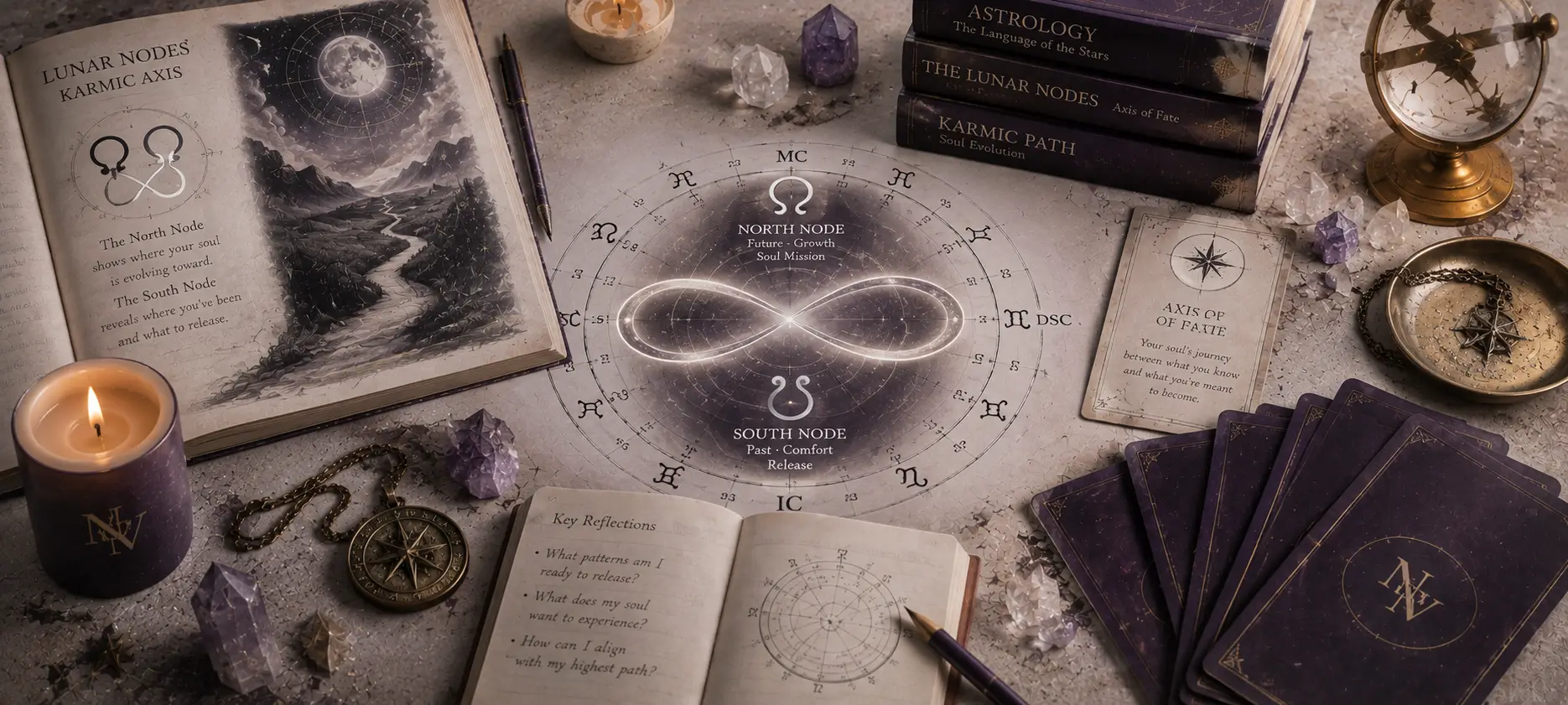
Psychologist's Advice: Growth Through Discomfort 🧠
According to Martin Schulman, the biggest trap of the South Node is not comfort itself, but the illusion that it provides fulfillment simply because it comes easy. Ask yourself honestly: is what I invest most energy into truly fostering growth, or is it merely a safe path chosen repeatedly out of fear of the unknown?Frequently Asked Questions ❓
Why are Lunar Nodes called Karmic Nodes? The term was popularized by Martin Schulman's book «Karmic Astrology», framing the axis as a roadmap from past experiences toward essential future growth.Do Nodes always move backward? Almost always — retrograde movement is their natural state, unlike planets for which retrogradation is temporary.
Which is more important — North or South Node? Neither is more important — they work as a single unit: the South shows past mastery, and the North indicates necessary growth.
Should I completely abandon South Node themes? No, that is a misconception — South Node skills should support your journey toward North Node growth.
How do True Nodes differ from Mean Nodes? True Nodes factor in real orbital fluctuations, while Mean Nodes offer a smoothed, averaged path.
How can I find my Node positions? An accurate birth chart calculation based on date, time, and location is required.
Are Nodes connected to past lives? This is a popular interpretation in karmic astrology, but the axis can also be understood purely psychologically as innate tendencies versus growth directions.
How do a partner's Nodes impact synastry? Personal planets touching your partner's nodal axis often indicate a growth-stimulating, significant bond.
Why are Nodes called Dragon's Head and Tail? This originates from Vedic mythology (Rahu and Ketu) and historical associations with eclipse points.
Can Nodes change signs during a person's life? No, natal Node positions remain fixed for life; only transiting Nodes move.
Where should I start studying my nodal axis? Begin by identifying the signs and houses of your North and South Nodes.
What is a Nodal Return and when does it occur? It happens every 18.6 years when transiting Nodes return to their natal positions, marking key life transitions.
Is the South Node something to avoid completely? No, it contains talents to leverage in support of your North Node journey.
Does the North Node guarantee easy success? No, growth requires conscious effort and stepping out of comfort.
How does the Nodal Axis differ from the Ascendant/Descendant axis? Ascendant/Descendant concerns identity and relationships, while Nodes represent developmental life trajectory.
What happens during the first Nodal Return at ages 18–19? It marks the transition into adulthood and early independent directional choices.
Your Nodal Axis Is Part of a Larger Story 🌟
Lunar Nodes reveal your path of growth, but the complete picture requires considering the entire chart — especially the Sun and Moon. If you wish to uncover your exact Node positions and how to navigate your growth vector, book a personal consultation tailored to your birth data.You can also read the article about Lilith, Selena, and Lunar Nodes to see how all three points connect, or try the Card of the Day for quick daily guidance on your path of personal growth.
Online services tarot, astrology... →